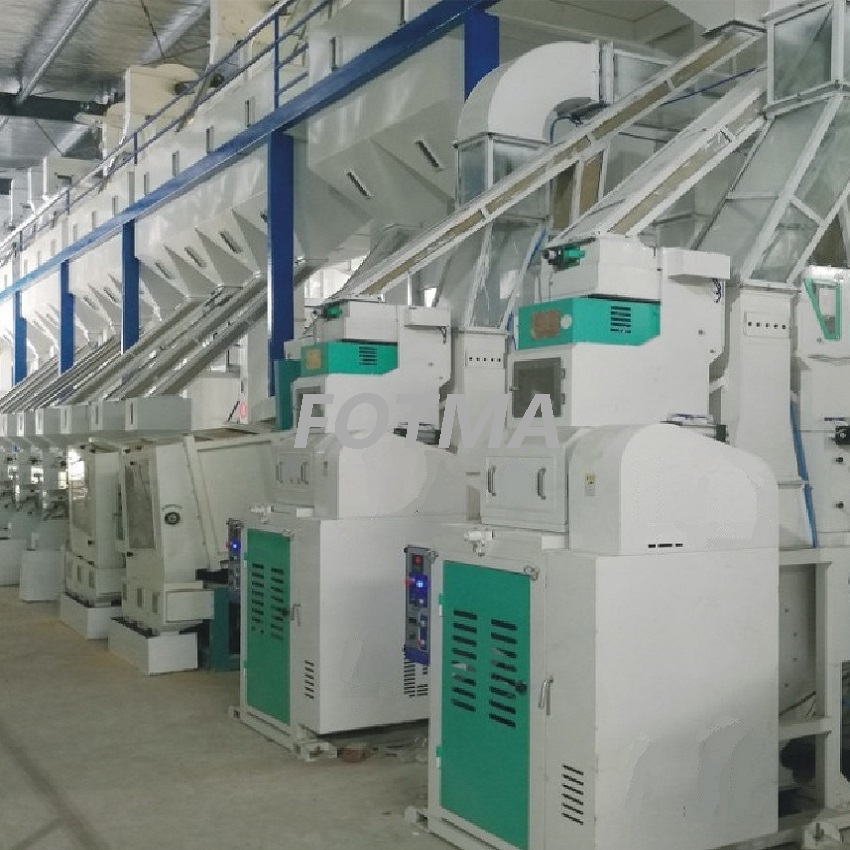
Are inconsistent yields quietly eroding your profit margins? Manual processing frequently results in shattered grains and unpredictable output. Relying on human judgment for machine calibration is a massive risk. Transitioning away from outdated setups is a crucial survival tactic in today's fiercely competitive agricultural market. Upgrading to an automatic rice mill plant directly addresses these operational headaches. In this engineering guide, we will explore how specific technological upgrades stabilize your daily production. We will examine continuous workflows, mechanical precision, and how to ultimately maximize your bottom line.
Key Takeaways
Error Elimination: Automation minimizes human intervention. This standardizes the final yield and prevents costly operational mistakes on the factory floor.
Damage Control: Programmable Logic Controllers and optical sensors dynamically adjust pressure. This drastically reduces the percentage of broken grains.
Seamless Integration: Advanced setups connect cleaning, husking, whitening, and packing into one continuous and uninterrupted workflow.
Scalable Solutions: Plant capacities can be customized from 100 to 300 tons per day. This perfectly matches specific commercial demands and local power grid constraints.
Financial Return: Upgrading to automated systems provides a rapid return on investment. The savings come primarily through optimized energy use and slashed labor expenses.
Why Consistency Matters in a Modern Processing Facility
In the agricultural processing sector, output stability is directly tied to profitability. Mill operators face strict market standards. Any fluctuation in the quality or quantity of milled rice can lead to significant financial losses. Understanding the technical impact of these fluctuations is the first step toward optimizing your entire operation.
The Hidden Costs of Manual Milling Errors
Traditional milling relies heavily on an operator's judgment to adjust machine settings. Picture a night-shift worker attempting to manually recalibrate a whitener while fatigued. This manual approach frequently results in two costly errors: over-milling and under-milling. Over-milling occurs when excessive pressure strips away too much bran. This reduces the overall weight of the final product and increases the likelihood of grain breakage. Conversely, under-milling leaves unsightly bran streaks on the grain. The result is a visually unappealing product that fails to meet commercial grading standards.
Manual systems are notoriously prone to mechanical jams. When operators fail to feed paddy at a consistent rate, machines easily overload. Bearings wear out prematurely. Sieve screens clog with debris. This leads to unplanned downtime, requiring workers to physically halt production to clear the machinery. Every hour your machinery sits idle translates directly to lost revenue and delayed shipments.
Meeting Market Demands with Precision
Today's consumers and international exporters demand absolute uniformity. When a major retailer rejects a pallet because the polish level varies from bag to bag, the financial blow is severe. Buyers expect every single grain to share the same size, shape, color, and polish level. By utilizing programmed parameters, automated systems ensure that the milling pressure and processing speed remain identical for every batch. This mechanical consistency guarantees that the final product meets strict export standards. It allows mill owners to secure lucrative, long-term contracts with premium buyers.
Key Automation Features That Stabilize Output
The transition from traditional methods to an automated facility is driven by sophisticated technology. These modern features continuously monitor and adjust the milling environment. They ensure optimal conditions for the grain at every single stage of its journey.
Centralized Control for Real-Time Monitoring
At the core of modern processing is the Programmable Logic Controller system. This centralized panel acts as the digital brain of the entire operation. Instead of requiring workers to pace the floor and manually inspect each machine, the system gathers real-time data from sensors placed strategically throughout the plant. If the system detects a sudden surge in paddy intake, it automatically adjusts the feed rates of downstream equipment. This intelligent synchronization prevents bottlenecks entirely without human intervention.
Automated Moisture and Temperature Sensors
The physical integrity of a rice grain is highly dependent on its internal moisture content and external temperature. Grains that are too dry become brittle and shatter easily. Overly moist grains can quickly clog abrasive machinery. To combat this, automated sensors continuously measure the moisture levels of the incoming paddy. Based on this live data, the system automatically adjusts the pneumatic pressure in the huskers and whiteners. By adapting the mechanical force to the specific condition of the grain, the machinery prevents physical stress and preserves the whole grain.
Intelligent Optical Sorting Technology
Optical sorting represents a massive leap forward in quality control. Older methods relied on physical sieves to remove defects. Today, automated color sorters utilize high-definition RGB cameras and artificial intelligence algorithms. They scan every individual grain as it free-falls through the machine. The AI identifies discolored grains, chalky kernels, and microscopic foreign materials in milliseconds. Immediately, high-speed pneumatic ejectors shoot precise bursts of air to remove the defective items. Remarkably, this entire process happens at full production speed.
How Advanced Equipment Reduces Grain Breakage
Grain breakage is arguably the most critical metric in the entire industry. Broken rice sells for a mere fraction of the price of whole head rice. Preserving the structural integrity of the grain is the primary objective of modern rice milling machinery. Let us look at how traditional and modern systems compare.
Operational Feature
Traditional Milling Systems
Automated Modern Machinery
Pressure Control
Manual adjustment, highly inconsistent
Pneumatic automatic adjustment based on grain size
Defect Removal
Basic sieves and manual inspection
AI-driven optical sorters with RGB cameras
Material Transport
High-speed belts causing impact damage
Slow-speed bucket elevators preventing shattering
Average Head Rice Yield
Prone to 10% to 15% breakage rates
Consistently maximizes whole grain yield
Precision Husking and Whitening Controls
The husking and whitening stages apply the most intense physical friction to the grain. Older abrasive whiteners often crushed the rice due to rigid and uneven pressure. In contrast, modern automated systems utilize pneumatic rubber roller huskers and advanced emery roll whiteners. The machine automatically adjusts the distance and pressure between the rollers based on the specific size of the paddy. This micro-precision ensures that just enough friction is applied to strip the husk without cracking the delicate endosperm beneath.
Gentle Automated Conveying Systems
Damage frequently happens while the grain is being transported between machines. Traditional augers can cause severe impact damage. To mitigate this, modern plants utilize automated slow-speed bucket elevators and gentle chain conveyors. Sensors meticulously control the speed of the elevators to ensure they never overfill. They prevent dropping the grain from excessive heights. This drastically reduces the impact force.
The Continuous Workflow of a Unified System
The true advantage of an automated setup is how individual machines communicate. A complete rice milling line links multiple processing stages together. This ensures that raw material flows logically from intake all the way to dispatch.
Automated Pre-Cleaning and De-stoning
Before any milling can begin, the raw paddy must be thoroughly cleaned. Automated pre-cleaners use vibrating screens and aspiration channels to extract dust and large debris. Following this, an automated de-stoner utilizes specific gravity and upward airflows to separate heavy impurities like stones and glass. Removing these hazards early is vital. It prevents severe damage to the delicate rubber rollers downstream.
Husking and Paddy Separation
Once cleaned, the paddy enters the husker. No husker achieves perfect efficiency on the first pass. This is where automation creates a brilliant closed-loop system. The mixture of brown rice and unhusked paddy moves to an automated paddy separator. Using differences in specific gravity, the separator identifies the unhusked paddy and routes it back to the husker for a second pass. This loop operates continuously without an operator manually transferring the grain.
Milling, Polishing, and Grading
The brown rice is then propelled to the whiteners and water polishers. Automated water polishers inject a highly precise micro-mist of water into the milling chamber. This creates a smooth and pearly finish on the grain's surface. Finally, the rice enters the grading plan-sifters. These automated vibrating screens separate the premium head rice from the broken grains with pinpoint accuracy.
Choosing the Right Capacity for Your Operation
Selecting the appropriate processing capacity is a critical financial decision. An oversized plant operating below capacity will result in wasted energy. An undersized plant will create production bottlenecks. You must match the machinery to your exact commercial output targets.
100 Tons Per Day for Growing Operations
For regional distributors transitioning from semi-automated setups, a 100 tons-per-day configuration serves as an optimal entry point. This capacity processes roughly 4 to 4.5 tons per hour. It strikes a perfect balance between manageable footprint requirements and highly consistent commercial output. At this scale, the machinery integrates fundamental automated features without overwhelming the facility's local power grid.
150 Tons Per Day for Medium-to-Large Enterprises
When an enterprise must fulfill larger supermarket contracts, upgrading capacity becomes necessary. A fully automatic rice processing line at the 150 tons-per-day scale processes about 6 to 6.5 tons per hour. It introduces more sophisticated automation protocols. This includes multi-stage whitening and advanced thermal control systems. Because the sheer volume of grain generates significant heat, automated systems dynamically adjust the milling pressure to mitigate thermal stress on the rice.
300 Tons Per Day for Industrial Output
For large-scale exporters, a 300 tons-per-day facility is the gold standard. Yielding up to 12.5 tons per hour, these industrial-grade plants are designed to operate around the clock. They process massive volumes of raw paddy with uncompromising precision. Industrial plants utilize multiple parallel processing lines. If one optical sorter requires routine maintenance, overall production does not halt.
Industry Trends: The Data-Driven Future of Milling
The agricultural processing sector is shifting rapidly toward data-driven operations. Recent market analyses highlight that automation in grain milling is pivoting heavily toward interconnected digital ecosystems. Industry trends indicate a surging adoption rate of smart sensors and cloud-based analytics among top-tier millers worldwide. This transition allows facility managers to monitor real-time energy consumption and machine health remotely via mobile dashboards.
Artificial Intelligence is evolving beyond optical sorting to encompass predictive maintenance. By analyzing vibrational frequencies and heat signatures from motor bearings, AI algorithms can accurately forecast mechanical failures weeks before they happen. This proactive maintenance model drastically reduces unplanned downtime. It represents a global paradigm shift from reactive repairs to predictive asset management, stabilizing output on a massive scale.
The ROI of Investing in Automated Processing
Transitioning to modern automated systems requires a substantial initial capital expenditure. Facility owners quickly realize this investment through three primary operational improvements. These are the drastic reduction of recurring labor costs, the maximization of premium grain yield, and the optimization of energy consumption.
Slashing Labor Costs and Dependency
Traditional operations rely heavily on manual labor for material handling and heavy lifting. By implementing automated workflows, the labor paradigm shifts entirely. Instead of employing dozens of manual workers to haul grain, a modern facility relies on enclosed bucket elevators. The human workforce is streamlined down to a few highly skilled technicians who monitor the central interface. This lowers operational overhead and mitigates the risks associated with workplace injuries.
Maximizing Yield and Premium Pricing
Profitability is intrinsically linked to the percentage of head rice produced per batch. Because automated pneumatic controls constantly adjust the pressure based on real-time sensor data, the machinery treats the grain gently. Automated plants routinely increase the head rice yield by several percentage points compared to traditional methods. Over the course of processing thousands of tons annually, this marginal increase translates into massive revenue growth.
Energy Efficiency and Reduced Waste
Older machines utilize outdated motors that run at a constant maximum speed. They draw excessive electricity even when the material load is light. Modern machinery is equipped with Variable Frequency Drives. These intelligent systems automatically modulate power consumption based on the actual volume of grain passing through the equipment. If the flow of paddy decreases, the motors instantly scale back their power draw.
Conclusion
Relying on outdated machinery makes stabilizing your output nearly impossible. An automatic plant removes the guesswork. It guarantees consistent quality, reduced breakage, and higher profit margins. Upgrading your facility is a strategic business decision that pays dividends through energy savings and premium product pricing. Evaluate your current production bottlenecks and choose a system capacity that aligns with your growth trajectory. To explore customized plant layouts and discover the exact equipment needed to modernize your facility, visit China Rice Mill and consult with our engineering team today.
FAQ
What is an automatic rice mill plant?
It is a continuous processing facility where raw paddy is cleaned, husked, whitened, polished, sorted, and packed with minimal human intervention. The entire operation relies on interconnected automated machinery to maintain high efficiency and consistent output.
How does a fully automatic processing line reduce broken rice?
It utilizes precision sensors and automated pneumatic controls to apply the exact amount of pressure required during the husking and whitening stages. This dynamic adjustment prevents the physical stress that typically causes grains to shatter.
How many operators are needed for a modern complete milling line?
Depending on the specific plant capacity, a fully automated facility typically requires only two to four skilled technicians per shift. Their primary responsibilities shift from manual labor to monitoring the central control interface.
Is modern milling machinery energy efficient?
Yes. Modern automated mills incorporate advanced Variable Frequency Drives and highly efficient motors. These optimize power consumption based on the real-time material load, significantly reducing electricity costs per ton of processed grain.
How does automation impact the overall head rice yield?
By eliminating manual calibration errors and utilizing gentle conveying systems, automation drastically reduces mechanical impact and thermal stress. This precise handling typically increases the overall head rice yield by 3 to 5 percent compared to traditional milling.
What maintenance is required for optical sorting sensors?
Optical sorters require routine cleaning of the camera lenses and calibration of the pneumatic ejectors. Modern systems often feature self-cleaning wiper mechanisms and automated diagnostic software to alert operators before dust accumulation affects sorting accuracy.