For mill owners and processing plant managers, few things are as frustrating as discovering stones, glass, or heavy geological impurities in the final product. This is especially true when a dedicated cleaning line is already in operation. This persistent issue damages sensitive downstream equipment. It also severely compromises product quality and brand reputation.
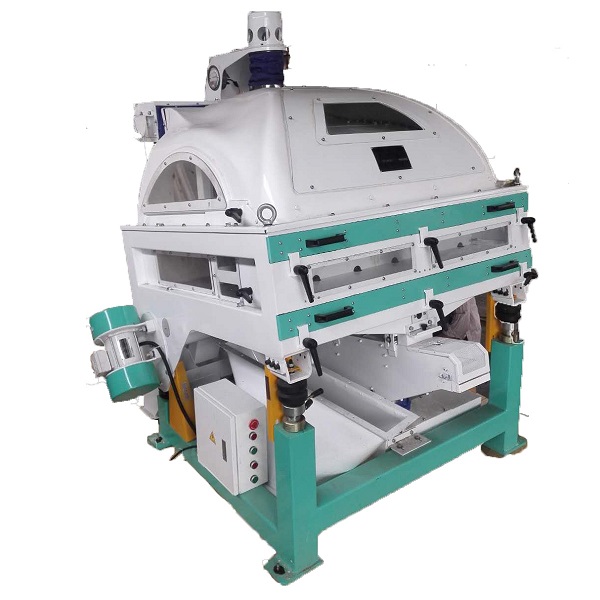
At the heart of any robust milling operation, a high-performance gravity destoner is your main defense against these contaminants. However, these machines are highly engineered aerodynamic systems. Their success is never static. Instead, it depends heavily on the dynamic physical conditions of the raw grain.
Recently, the agricultural processing sector has experienced a massive shift. Mechanized mass-harvesting combined with erratic global weather patterns means raw grain now arrives at the intake pit with unprecedented levels of moisture variability and field debris. Ten years ago, a standard setup could easily handle the incoming load. Today, the baseline raw material is simply dirtier and wetter. This industry-wide trend makes mastering your separation technology more critical than ever.
In this comprehensive guide, we will explore how variables like moisture, density, and size uniformity impact separation efficiency. We will also dive into practical calibration techniques and equipment strategies. These field-tested insights will help you stabilize throughput and maximize your facility's financial return.
Key Takeaways
Moisture Content Matters: High moisture levels increase surface friction and cause grain clumping. This actively prevents proper fluidization on the separation deck.
Size and Density Uniformity: Mixed grain sizes or impurities with densities closely matching the grain make mechanical separation significantly more difficult. This scenario requires hyper-precise tuning.
Impurity Types: The presence of mud balls, fine agricultural dust, or lightweight porous stones necessitates distinct machine calibrations compared to standard heavy quartz.
Machine Calibration is Key: Air volume, deck inclination, and vibration amplitude must be continuously adjusted. Operators must match these settings to the ever-changing physical conditions of the incoming batch.
Equipment Selection: Upgrading to advanced separation technology can effectively overcome the inherent limitations caused by poor raw material conditions.
Understanding the Gravity Destoner: How Does It Actually Work?
To fully grasp how external environmental conditions affect separation efficiency, we must first establish the baseline mechanics of the equipment. These machines rely on precise physics to isolate impurities. They act as a delicate balancing scale between air pressure and mechanical force.
The core operation relies on the fundamental principle of specific gravity differences between the grain and the foreign material. The machine utilizes a combination of directional mechanical vibration and a controlled upward airflow. This combination stratifies the materials on a specialized textured sieve deck.
When raw material pours onto the deck, the upward airflow lifts the lighter grain. This creates what fluid dynamics experts call a fluidized bed. In this suspended state, the lighter grains float to the top layer. They flow smoothly downward toward the clean discharge port, guided by the downward slope of the deck. In contrast, heavier impurities sink through this bubbling layer. They make direct frictional contact with the wire mesh. The continuous directional vibration then aggressively walks these heavy stones upward against the incline. Finally, they discharge safely at the opposite end.
Positioned typically immediately after the primary pre-cleaning stage, a standard processing facility relies on the rice stone separator as the critical gatekeeper. It stands between the initial rough intake and the delicate high-precision milling machinery downstream. If this unit fails to fluidize the grain properly due to poor batch conditions, the entire processing line suffers. You will see reduced capacity, accelerated wear and tear, and ultimately compromised product purity.
Grain Moisture Content: The Hidden Efficiency Killer
Moisture is arguably the most disruptive yet frequently overlooked variable in grain processing. The physical state of water fundamentally alters the aerodynamic and mechanical behavior of the material on the gravity deck. This applies whether the water is trapped within the kernel or coating its surface.
For optimal separation, the upward air velocity must exactly match the terminal velocity required to lift the grain. If the air is too strong, it blows the grain entirely into the exhaust system. Damp or freshly harvested batches possess a significantly higher mass and a sticky surface texture. These characteristics drastically increase the overall weight of the grain bed. Consequently, standard airflow parameters become insufficient to lift the material. When the grain fails to fluidize, it remains compacted and sluggish on the screen. This compaction traps heavy stones in the upper layers. The stones then wash downward alongside the clean product.
Furthermore, moisture significantly increases the coefficient of friction between individual kernels and the stainless steel mesh. Under dry conditions, grain flows like a liquid down the incline. However, wet grains drag aggressively against the mesh. This frictional resistance disrupts the steady downward flow. It leads to erratic material accumulation. In severe operational scenarios, field engineers often observe the vibration mechanism catching the dragging wet grain. The machine physically walks high-quality product upward and discharges it into the waste chute. This is a highly costly phenomenon known as yield loss.
Industrial milling environments are inherently dusty. When high-moisture grain enters the chamber, surface water mixes with fine agricultural dust, loose soil, and microscopic organic matter. Operators often notice a thick cement-like paste forming along the edges and perforations of the wire mesh. This paste coats the screen and blocks the air holes. Engineers refer to this process as screen blinding. Once blinded, the upward airflow is choked off completely in those specific zones. This creates dead spots that instantly halt the separation process and require immediate operational downtime for manual scrubbing.
Grain Size, Shape, and Density Variations
Mechanical separation systems are calibrated based on an assumed baseline of uniformity. When the physical dimensions and weight of the raw material fluctuate wildly from kernel to kernel, the machine struggles. It simply cannot maintain a stable and distinct stratification layer.
Optimal performance demands uniform batches. If a hopper feeds a chaotic mixture of large plump grains alongside small broken fragments, the airflow cannot be optimized for the entire bed simultaneously. Air pressure robust enough to lift large grains will be too forceful for the smaller fragments. This aggressively blows broken grains into the exhaust system or pushes them up into the stone discharge. Alternatively, reducing the air to protect the small grains leaves the large grains un-fluidized. This traps stones within the clean product flow. This stark contrast highlights exactly why precise size grading prior to destoning is highly recommended.
The most complex engineering challenge arises when the density of the grain is nearly identical to the density of the impurities. Standard quartz or granite stones are significantly heavier than rice or wheat. However, agricultural environments frequently introduce laterite stones, dried mud balls, or highly porous volcanic rocks into the mix.
Advanced computational fluid dynamics models demonstrate a clear limitation. When density differences fall below a specific threshold, standard air and vibration settings fail. Mud balls may fluidize alongside the grain rather than sinking. Separating these similar-density materials requires hyper-precise air tuning. It often necessitates slowing the feed rate to allow the machine more time to tease apart the marginal weight differences.
The Ratio and Composition of Impurities in the Batch
The initial dirtiness of the incoming raw material directly dictates how the equipment must be operated. Every machine is rated for a specific impurity percentage. Pushing beyond these mechanical limits fundamentally alters the dynamics on the deck.
Different geographical harvesting regions introduce varying geological impurities. An overwhelming volume of heavy stones can physically overload the discharge end of the deck. The vibration mechanism is designed to walk a specific volume of mass up the incline per minute. If the concentration of stones is too high, they accumulate faster than they can be discharged. This creates a physical bottleneck. It forces stones to spill backward into the clean grain flow. To mitigate this, operators must actively respond by drastically reducing the feed gate. Unfortunately, this lowers the overall hourly throughput of the plant.
Specifically, gravity destoners are meticulously designed to remove heavy impurities, not light trash. If fine impurities like dust, sand, string, and straw are not removed by a prior high-efficiency paddy cleaner, they will wreak havoc on the deck. Shredded straw and string easily tangle in the screen mesh. Dense pockets of fine silica sand sift through the grain and alter the airflow distribution. This uneven air pressure creates localized areas with zero fluidization, allowing stones to easily slip through undetected.
How to Calibrate Your Destoner for Different Grain Conditions
Recognizing the physical condition of the grain is only half the battle. The true operational advantage lies in the hands of the technician. You must know exactly how to manipulate the machine's variables to compensate for challenging conditions.
Raw Grain Condition
On-Deck Symptom
Engineer's Calibration Strategy
High Moisture / Wet Surface
Grain clumps together; fails to fluidize; drags against mesh.
Increase air volume via variable frequency drives. Slightly increase deck tilt to assist downward flow.
High Concentration of Mud Balls
Mud balls float with grain instead of sinking due to similar density.
Reduce feed rate. Lower the deck inclination angle to increase residence time. Fine-tune air pressure to a gentle simmer.
Excessive Heavy Stones
Stone discharge port clogs; stones spill back into clean grain.
Reduce intake feed gate. Decrease deck tilt angle to allow easier upward climbing for heavy mass.
Airflow is the most critical variable in the separation process. Operators must constantly monitor the visual state of the fluidization bed. For heavier or wetter grains, the air volume must be increased. This provides the extra kinetic energy required to lift the damp mass. For lighter or drier grains, the air pressure must be dialed back. Excessive air will cause the grain to boil too violently. The visual goal is a gentle bubbling fluidization, similar to a light simmer.
The tilt angle of the deck controls the gravitational resistance. It dictates the speed at which the grain flows downward and the difficulty with which the stones climb upward. Most industrial machines operate at an adjustable inclination of 10 to 15 degrees. Steeper angles are best utilized for high-flow clean grain with very few stones. The grain moves quickly, maximizing plant capacity. Lower angles are absolutely required when dealing with heavy stone concentrations or similar-density impurities. A flatter deck slows the grain flow and increases residence time for precise stratification.
Finally, the motor's throw amplitude and frequency dictate the mechanical force applied to the stones. If the vibration is too weak, heavy impurities stall on the mesh and eventually overflow into the clean grain. If the vibration is too aggressive, the entire grain bed bounces erratically. This destroys the delicate stratification layer. Adjusting the eccentric weights on the vibration motors is an essential calibration step when switching between vastly different grain profiles.
The Business Impact: Why Destoning Efficiency Dictates Your ROI
At the bottom of the operational funnel, technical efficiency directly translates to financial performance. A destoner is not merely a cleaning tool. It serves as a critical financial safeguard for the entire processing facility.
The primary financial justification for optimizing separation efficiency is asset protection. Downstream machinery operates using high-friction components with incredibly tight tolerances. For instance, a single hard stone slipping past the destoning phase can instantly shatter the expensive emery rolls in a whitener. It can also tear the synthetic rubber rollers in a pneumatic husker. The exorbitant cost of replacing these precision parts far outweighs the time spent properly calibrating the cleaning line. You must also factor in the lost revenue during unscheduled facility downtime.
In today's hyper-competitive agricultural market, achieving absolute stone removal is the baseline for food safety compliance. Consumers and wholesale buyers have zero tolerance for physical contaminants. Consistent high-efficiency destoning ensures that the final milled rice commands premium market prices. It protects the brand from disastrous product recalls and builds long-term lucrative trust with international distributors.
Choosing the Right Equipment for Tough Conditions
When raw material conditions consistently fall outside optimal parameters, manual calibration reaches its limits. Chronically high moisture or extreme impurity loads demand a better mechanical approach. In these scenarios, strategically upgrading the equipment architecture is the most cost-effective long-term solution.
Standard single-deck models are highly effective for uniform dry grain. However, when processing challenging batches, accidental grain loss becomes a significant issue. To combat this, modern facilities frequently upgrade to advanced double-deck architectures, such as the TQSF series. These machines utilize a primary upper deck for bulk separation and a secondary lower deck specifically engineered to re-process the stone discharge. This dual-layer safety net ensures that any good grain accidentally carried away due to moisture or friction is recovered. This drastically minimizes yield loss.
Many separation failures on the gravity deck actually stem from inadequate pre-cleaning. Machines that integrate both screening and destoning into a single vertical chassis handle highly impure grain conditions exceptionally well. By mechanically screening out large trash and small sand immediately before the material hits the gravity deck, these combined units ensure the airflow remains unobstructed. This prevents dead spots and screen blinding.
The physical state of the grain before it enters the destoning chamber dictates the final outcome. Utilizing a robust rice cleaner and destoner system that incorporates vibration cleaning technology can effectively pre-condition the raw material. Vibration cleaners efficiently size-grade the grain and aggressively shake loose adhering dust or mud. This creates a stabilized uniform feed for the gravity deck to process without mechanical interference.
Conclusion
Grain conditions fundamentally dictate destoning success. Variables such as moisture content, size uniformity, and impurity composition constantly shift the aerodynamic and mechanical dynamics within the machine. When you stand next to the processing line, understanding these physical interactions is what separates an average operator from a master technician.
Operators hold the power to overcome these physical hurdles through vigilant machine calibration. By mastering airflow, adjusting deck tilt, and tuning vibration, facilities can maintain high purity standards even with subpar raw materials. Ultimately, selecting the right equipment architecture protects your downstream milling investments. Whether you need the dual-layer security of a double-deck system or the raw power of integrated pre-cleaners, upgrading your machinery ensures long-term uninterrupted performance. We highly recommend evaluating your current processing line today. Visit Chinaricemill to explore specialized equipment tailored to conquer your toughest grain conditions and secure your facility's profitability.
FAQ
How does grain moisture affect a gravity destoner?
High moisture causes individual grains to stick together and significantly increases surface friction against the deck mesh. This added weight and drag prevent the upward airflow from creating the necessary fluidized bed. It makes it exceedingly difficult for the machine to separate heavy impurities from the compacted grain.
Can a destoner remove mud balls and glass?
Yes, provided the specific density of the mud balls or glass is heavier than the grain itself. However, because impurities such as dried mud balls often have a density very close to the grain, they require highly precise air volume reduction and deck tilt adjustments to ensure successful stratification and separation.
Why is good grain coming out of the stone discharge?
This costly issue typically occurs if the upward air volume is set too high, the screen inclination is too flat, or the feed rate is uneven. When air pressure is too aggressive, it boils the grain violently. This pushes clean product up the incline alongside the stones. Adjusting these aerodynamic parameters will stabilize the fluidization and halt grain loss.
What is the difference between a paddy cleaner and a destoner?
A paddy cleaner utilizes perforated physical screens to remove large and small impurities based purely on their physical size. In contrast, a destoner uses a combination of upward airflow and mechanical vibration to remove heavy impurities based on their weight and density. They are designed to work sequentially in a complete milling line.
What is the ideal moisture content for destoning grain?
For optimal aerodynamic fluidization and minimal screen friction, grain moisture should ideally be kept between 12% and 14%. When moisture levels exceed 15%, operators will notice sluggish material flow and an increased risk of screen blinding, requiring immediate airflow and tilt calibrations.
How often should a gravity destoner screen be cleaned?
Routine inspection should occur at least once per shift. However, if you are processing high-moisture grain or batches with heavy agricultural dust, the wire mesh should be manually brushed down every 4 to 6 hours to prevent blinding and maintain consistent upward air pressure.